
 UA
UA  EN
EN 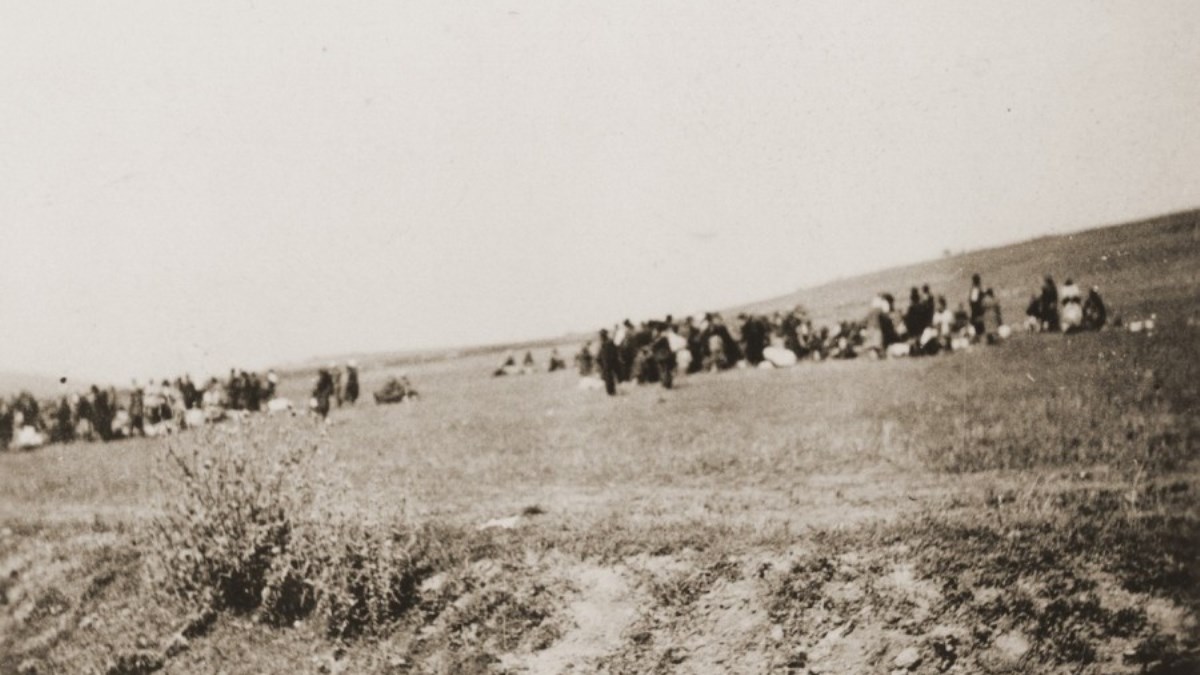
After the Nazi occupation, the Ukrainian lands were to be turned into a raw material appendage, and the population was to be evicted and partially liquidated. The occupation provided for the division of the territories into several parts. Most of the lands from Southern Belarus to Zaporizhzhia were included in the Reichskommissariat Ukraine with the center in the city of Rivne.
In the Reichskommissariat, most Jews were exterminated by mass shootings carried out in the nearest ravine or clearing (the so-called “Holocaust by Bullet”). Everyone was shot – men, women and children. The main role in these operations was assigned to the police and SD forces. After the mass murders, the SS deliberately tried to hide these mass graves.
Kamianets-Podilskyi (Khmelnytskyi region) – one of the first places of mass execution of Jews in Ukraine since the beginning of the occupation. The city was occupied on July 10, 1941. When German and Hungarian troops entered Kamianets-Podilskyi, about 12,000 Jews lived there, but by August, due to Jews expelled by the Hungarian occupation authorities from Carpathian Ukraine, their number had increased to 26,000. From August 26 to 28, 1941, by order of SS Obergruppenführer Friedrich Jekeln, about 23,000 Jews were exterminated.
Kharkiv was occupied on October 24, 1941. On December 14, by order of the military commandant of the city, General Puttkamer, all Jews were ordered to relocate to the area of the Kharkiv Tractor Plant (KhTZ) within two days. A Jewish ghetto was organized in the workers’ barracks that remained after the construction of the plant. Every day, groups of 250–300 people were taken out of the ghetto and taken to the Drobitsky Yar for execution; about 15,000 Jews were killed there. Already in early 1942, the Kharkiv ghetto ceased to exist. Red Army prisoners and mentally ill people were also shot in the ravine. In total, according to the State Archives of the Kharkiv Region, from 16,000 to 20,000 people were shot.
Berdychiv (Zhytomyr region) was occupied on July 7, 1941. On September 15, the 45th Police Battalion and the “staff company” of the Supreme SS and Police Führer Obergruppenführer Jekeln exterminated about 12,000 Jews of Berdychiv. Jews were forcibly gathered in a certain place and sent out of the city on foot and in trucks. The shootings were carried out in the airfield near the settlements of Radyanske (now Romanivka) and Shlemarka (now Lubomyrka) in pre-prepared pits.
Lutsk (Volyn region) was occupied on June 25, 1941. On December 11, a ghetto was created, and about 18,000 Jews were herded into it. On August 20–21, 1942, a large anti-Jewish action was carried out in the ghetto. On August 20, the Jews were gathered in one of the ghetto premises. Some were left in the ghetto, and 15,000 were taken by trucks to the execution site – in the forest, in a tract near the village of Polonka, 8 km from the city. Three large pits were prepared there in advance. Before the shooting, people were forced to undress, go down into the pit and lie face down; the Jews were killed with a shot in the back of the head.
In Bohdanivka village (Mykolaiv region) in October 1941, the Romanian occupiers established an extermination camp. In December 1941, after an outbreak of typhus, it was decided to exterminate all prisoners. By mid-December, about 55,000 Jews had been gathered in Bohdanivka (approximately 30,000 persons from Odesa). The Romanian authorities began the mass murder of Jews on December 20, 1941. The extermination operation, timed to coincide with J. Stalin’s birthday, was called “Stalin’s Gift.” The prisoners were forced to dig holes in the frozen ground with their bare hands and pile into them the bodies of their fellow prisoners who had just been shot or burned alive in the barns. From December 20, 1941, to January 15, 1942, all the camp’s prisoners were exterminated. Straw, reeds and firewood were brought into the ravine, located near the camp, in advance. The undressed prisoners were driven to the edge of the cliff in groups of 15–20 people. After that, the soldiers of the punishment detachment shot the people. The killed, and more often only wounded, victims fell to the bottom of the ravine, where a huge fire was already blazing. Small children were thrown alive from above into the flames.
Dnipropetrovsk (now Dnipro) was occupied on August 25, 1941. The Jewish population of the city was gathered on October 13, 1941, in the square behind the building of the department store “Lux” (now the Central Department Store) on K. Marx Street (now D. Yavornytskyi Street), 52. People were searched, valuables were taken, grouped into columns and sent on foot under escort to the exit from the city in the direction of Zaporizhzhia Highway. In the area of the old Jewish cemetery, people were directed to a ravine that was part of the Chervonopovstanskaya Balka (now Dovha Balka) in the territory of the local Botanical Garden. On October 13–14, approximately 11,000 Jews were killed by a team of SS and police. Over the next month, about 1,000 Jews were shot there. At the end of 1941, the shootings of the population took place in the anti-tank ditch near the Jewish cemetery (modern territory of L. V. Pisarzhevsky Park). The shootings were also carried out in an anti-tank ditch near the Verkhnie village (now the corner of Yangel and Energetychna Streets). In total, over 20,000 Jews were shot in Dnipropetrovsk during the Nazi occupation.
Kryvyi Rih (Dnipropetrovsk region) was occupied on August 14, 1941. On October 14, almost all the Jews of the city were exterminated. The local Jews were gathered in the synagogue. Before that, they were told that they would be taken to Palestine, so they had to take valuables and food with them. The Jews began to be taken out for execution at about 10 AM, taking away valuables beforehand. People were taken to the outskirts of the city, to the quarry of mine No. 5 of the Ilyich Mine Management of the Kryvbas Ruda Trust (liquidated in February 1987). People were forced to undress before being shot and were killed in groups of 10 people. About 2,000 Jews were exterminated that day. On October 15, the executions continued, and 2,500 residents and 800 Jewish prisoners of war were shot.
Mass executions of Jews also took place in other cities and towns. For example, in Proskurшv (now Khmelnytskyi), on November 4, 1941, an anti-Jewish campaign took place, during which 5,300 Jews were killed in a ravine outside the city during the day. In Rivne on November 6–7, 1941 in the Sosonky tract (currently within the borders of Rivne) about 17,500 Jews were killed. In Kherson in an anti-tank ditch on the outskirts of the city on September 25–26, 1941, almost all the inhabitants of the ghetto – about 5,000 Jews – were shot. In Artemivsk (now Bakhmut) Donetsk region on the night of January 10–11 in the underground chamber No. 46 of the Artemivsk alabaster plant (territory of the Artwinery champagne factory, looted in 2023 by the Wagner PMC) about 3,000 Jews were walled up alive. In Stalino (now Donetsk) in March 1942, the entire Jewish population of the city – over 3,000 – was driven into the ghetto. Anti-Jewish actions began. The place of mass execution was the pit of mine No. 4/4-bis “Kalynivka”. Jews were shot or poisoned in special gas machines; the corpses were thrown into the mine shaft. This place became a grave not only for Jews. The bodies of already killed prisoners of war were brought here, and the inhabitants of the city were executed on the spot.
In Simferopol on December 9–11, 1941, the occupiers drove Jews to three locations, with their belongings and suitcases. The mass shootings took place just 10 km from the city, in the direction of Feodosia. The victims of the mass murder were about 13,000 people, including about 10,600 Jews, 1,500 Crimean Tatars and 600–1,000 Roma.
The village of Agrobaza near Mariupol was also a place of mass execution of Jews (Donetsk region), where over 8,000 Jews were executed from October 18 to 20, 1941; “Ditch of Death” 5 km from Melitopol (Zaporizhzhia region), where 2,000 Jews were shot on October 11, 1941; the Berezovy Riv tract in Chernihiv, where over 1,500 people were shot during the occupation; Merlikova Balka in Berdyansk (Zaporizhzhia region), where about 800 Jews were executed on October 19, 1941; Zvolyanska Balka, 2 km from the village of Kalynivka (Dnipropetrovsk region), where in October 1941 about 500 Jews from the surrounding villages of the former Stalindorf Jewish National District were shot, etc.
According to historians, there are about 5,000 “Babyi Yars” in Ukraine – places of mass extermination of tens of thousands of people by the Nazis.